|
| HOME | SHIPS | RAIDERS | SUBMARINES | CASUALTIES | CALENDAR | ABOUT |
|---|
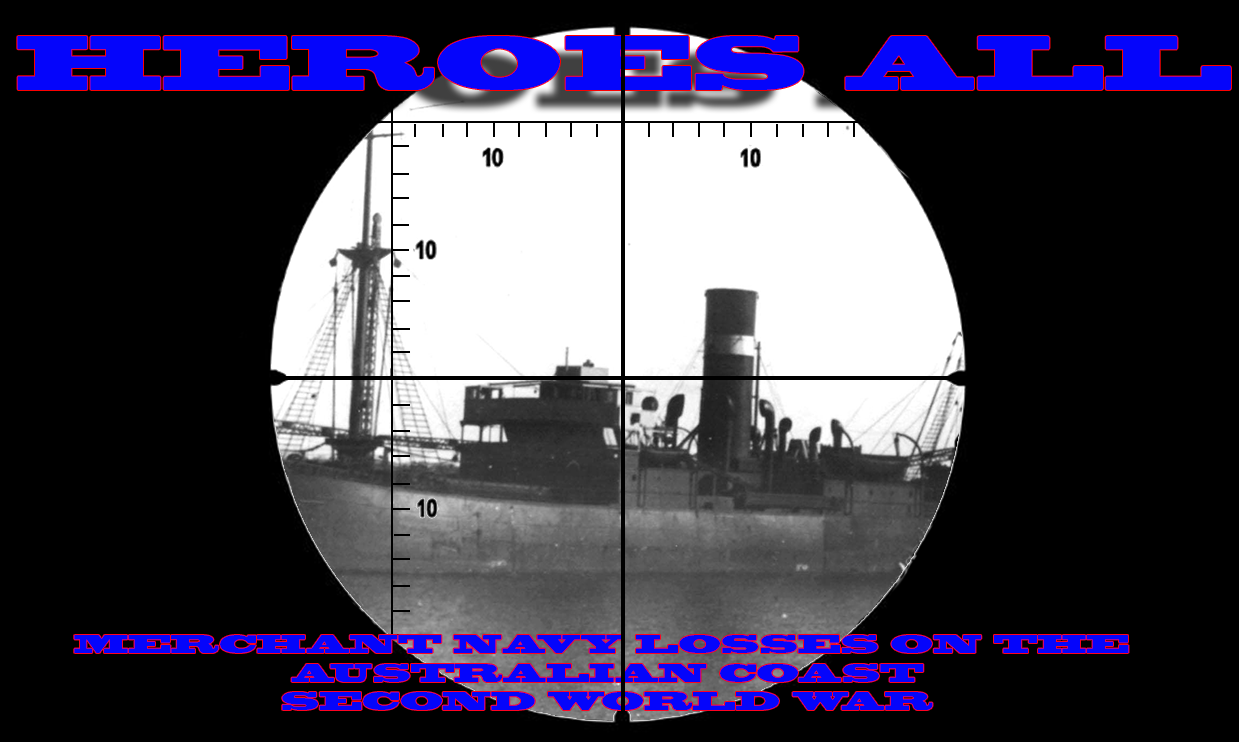
PLEASE NOTE: THIS SITE IS UNDER CONSTRUCTION - IT CURRENTLY CONTAINS QUITE AN AMOUNT OF INFORMATION , HOWEVER SOME OF THE LINKS WILL NOT WORK AND THERE IS FAR MORE INFORMATION TO BE UPLOADED, THANK YOU FOR YOUR PATIENCE The term Merchant Navy refers to the ships and crew of commercial shipping companies. These may not just be passenger ships, cargo ships, oil tankers and the like, it also includes ships that are on "charter" to governments such as transport ships, troop ships and hospital ships. These vessels might be undertaking military duties, however, they were still staffed by Merchant seamen. Life at sea was never easy, even in peacetime you were still at the mercy of mother nature, you worked 7 days a week, long disjointed hours, lived in cramped and sometimes squalid accommodation, you had to pay for all your own clothing and equipment and to add to that Merchant Mariners were often were not well-paid. In the Merchant Navy you are employed under "the ship's articles of agreement". This constitutes a contract between the seafarer and the Master of a vessel. They specify the name of the ship, the conditions of employment (including the size and ratings (what job you do) of the intended complement), seafarer's compensation (shares or pay rate), the nature of the voyage and duration, and the regulations to be observed aboard ship and in port, including punishable offenses and punishments. Traditionally, each seafarer is required to sign "the articles", and "the articles" include for each seafarer, their rating (Job) , the place and the day of signing on and the place and the date of signing off of the ship. In very basic landlubber terms these men were contractors or casuals not full time employees. During the Second World War Merchant Navy ships carried many valuable cargoes . These cargoes may have been materials directly required by the military, but they also could be exports which provide desperately needed income for governments. If you can stop incoming trade you may be able to starve a country into submission, if you can cut off outgoing trade you can also bring a country to its knees financially. There is more than one way to win a war! It was not just the "fighting Navy" that was taking risks during the Second World War, Merchant ships were often attacked, not only in foreign waters but also on the Australian coast. In fact it could be said that merchant ships were in more danger than the countries warships. They were a "soft target" as many had no form of defence and others were fitted with one outdated gun left over from the First World War. Not attempting to take anything away from the many gallant (fighting) Navy men who saw service in the Second World War, lets look at comparison of a Navy man and a Merchant man who had lost their ship due to enemy action.
Figures published by the Seaman’s Union of Australia (SUA) in 1972 show that 386 members of the union lost their lives during the Second World War. Given the union’s claim of a total membership of 4,500 at the beginning of the war, the overall fatality rate among seamen members of the SUA during the Second World War was 8.5 per cent, a rate higher than that sustained by any of Australia’s fighting services. |
|---|